Hard • 78x66
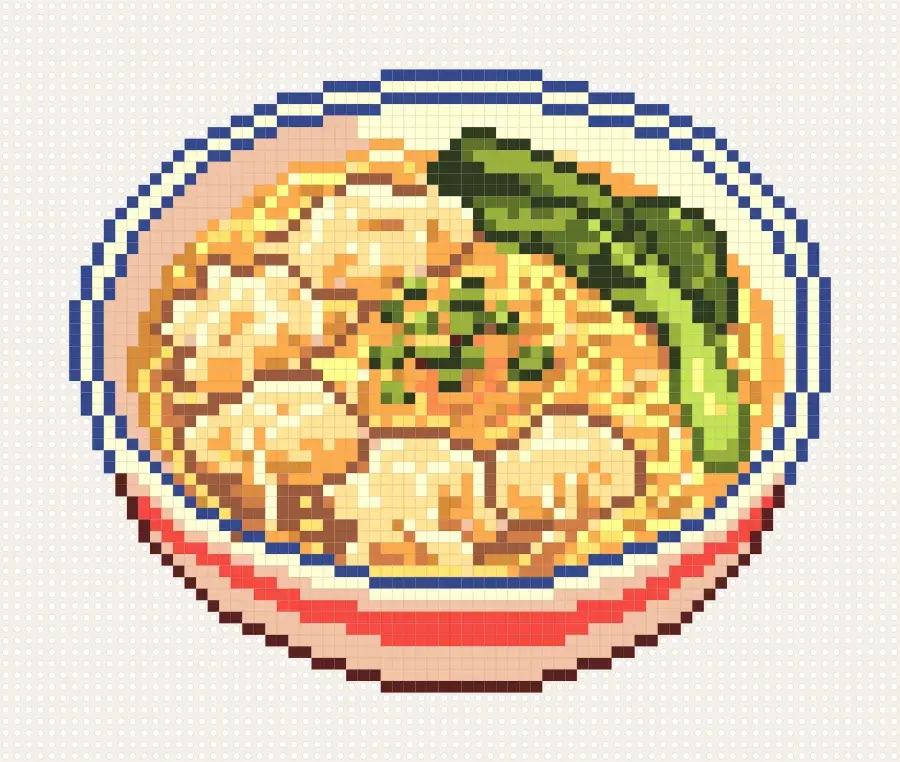
Hong Kong Wonton Noodles
A blue-rimmed bowl of Hong Kong wonton noodles, with golden dumplings, tangled noodles and leafy greens above a red patterned bowl.
Free food perler bead patterns: egg tarts, Hong Kong cafe favorites, sushi, snacks and desserts. Browse printable grids, bead counts and color guides.
The fun of food bead art is in the details: a browned pastry edge, the pale lines in salmon, or a bright reflection on a glass of milk tea. Browse the designs below for a favorite snack, a cafe-themed gift or a detailed pixel-art display. Each pattern page lets you check the grid and palette before choosing your next project.
14 patterns
Hard • 78x66
A blue-rimmed bowl of Hong Kong wonton noodles, with golden dumplings, tangled noodles and leafy greens above a red patterned bowl.
Hard • 68x39
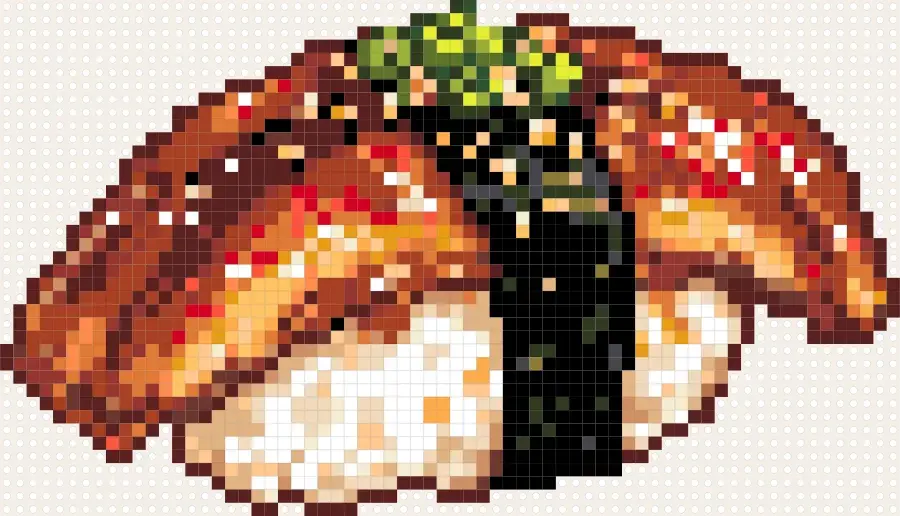
Glazed grilled eel drapes over white sushi rice, wrapped in a dark nori band and topped with a small green garnish. Amber highlights give the eel a caramelized finish.
Hard • 72x72
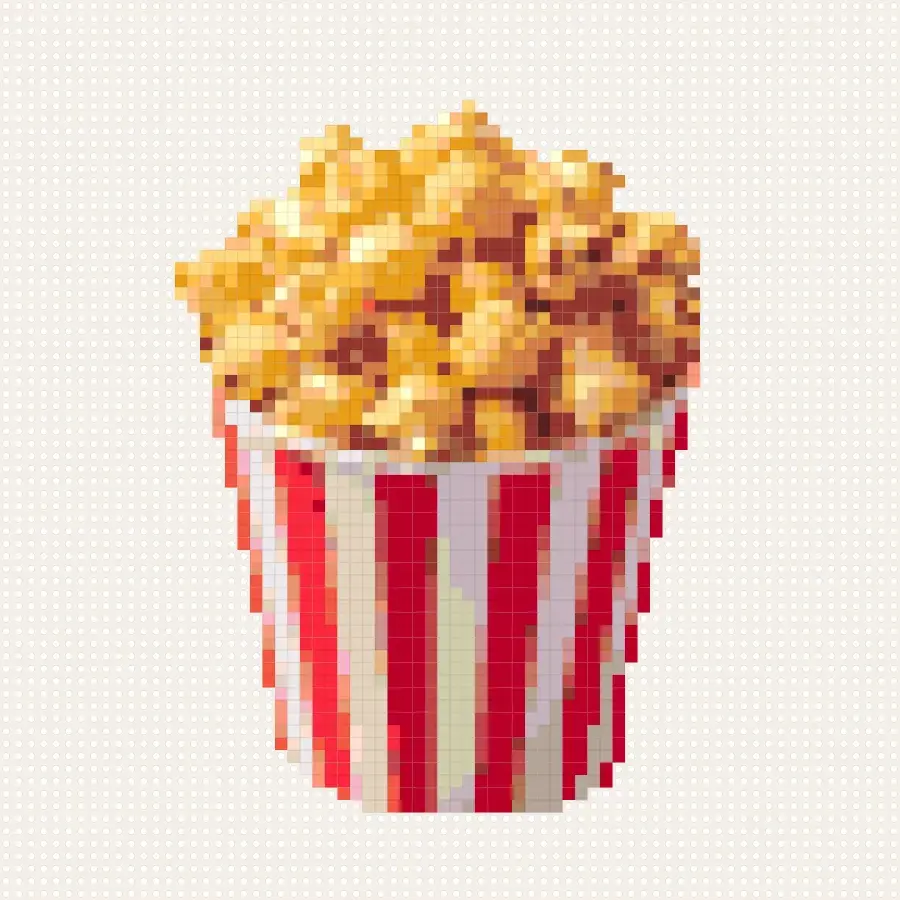
A tall red-and-white striped carton packed with golden French fries. Toasted edges, warm potato highlights and shaded paper folds create a detailed fast-food treat.
Hard • 82x65
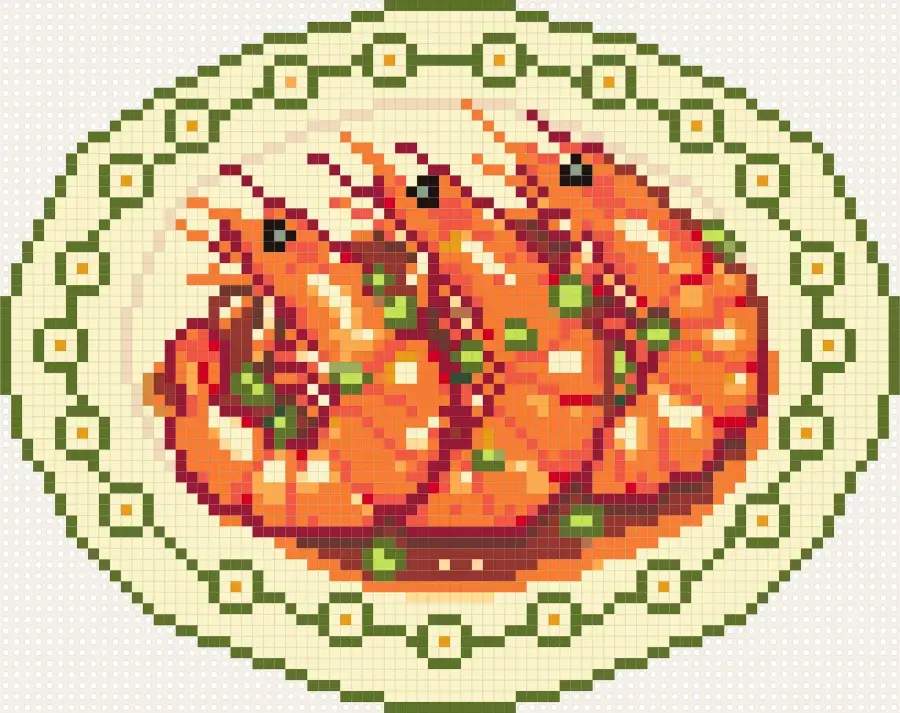
Glossy red-orange braised prawns fill a cream plate with a green patterned rim. Dark sauce shadows, pale shell highlights and little green garnishes bring the seafood platter to life.
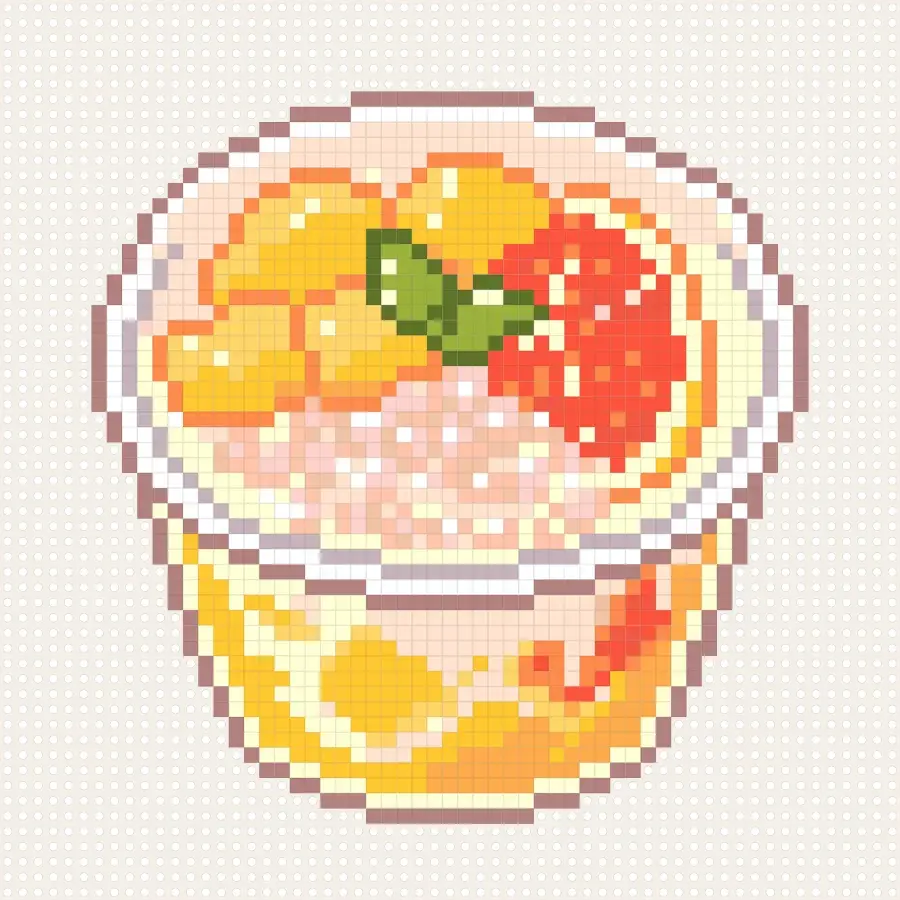
Hard • 59x59
A chilled mango pomelo sago dessert in a clear cup, layered with golden mango, pink pomelo and creamy coconut milk.
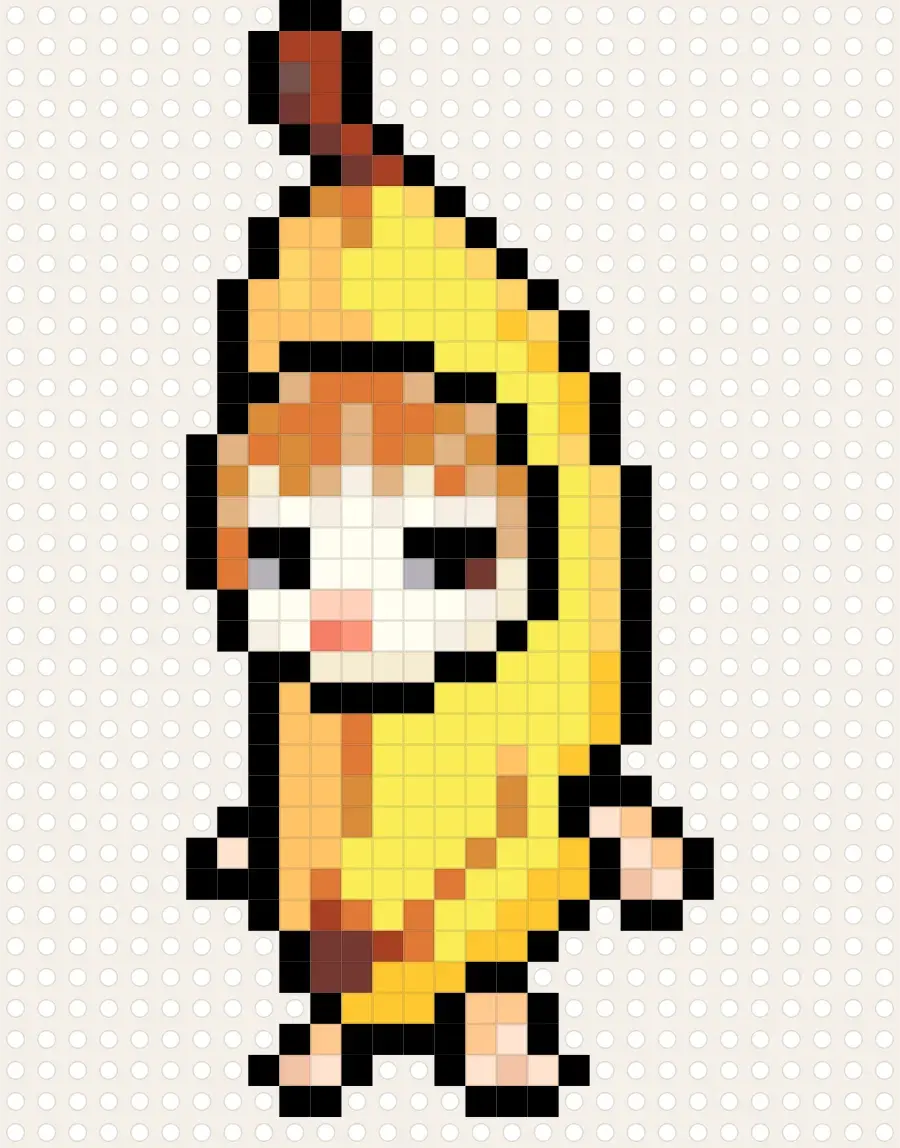
Hard • 29x37
A wide-eyed little kitten peeks out of a bright yellow banana costume, with tiny paws and a curved brown-tipped peel.
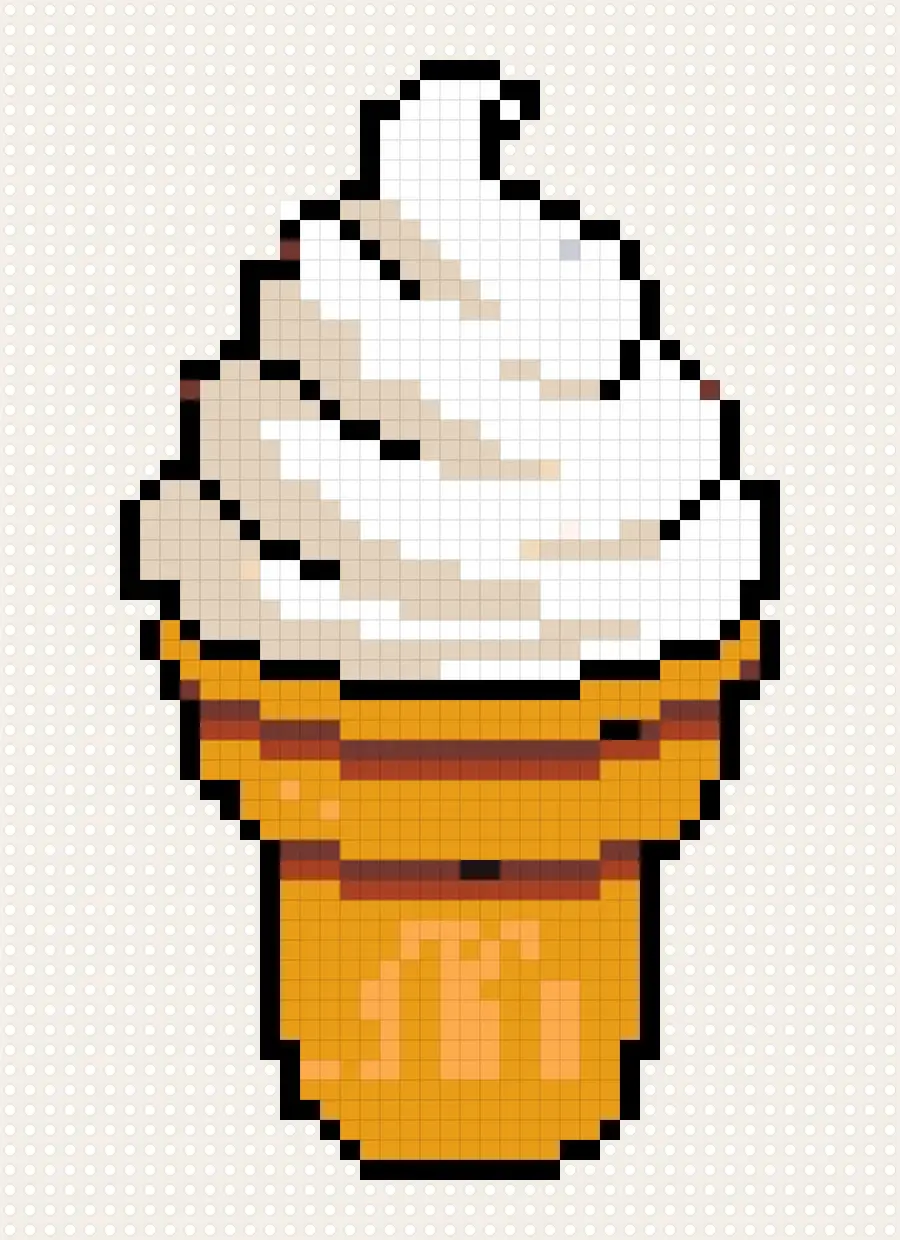
Hard • 45x62
A tall vanilla soft-serve swirl in a golden cone, with a bold black outline and soft cream shadows. Brown bands and narrow golden highlights give the cone its texture.
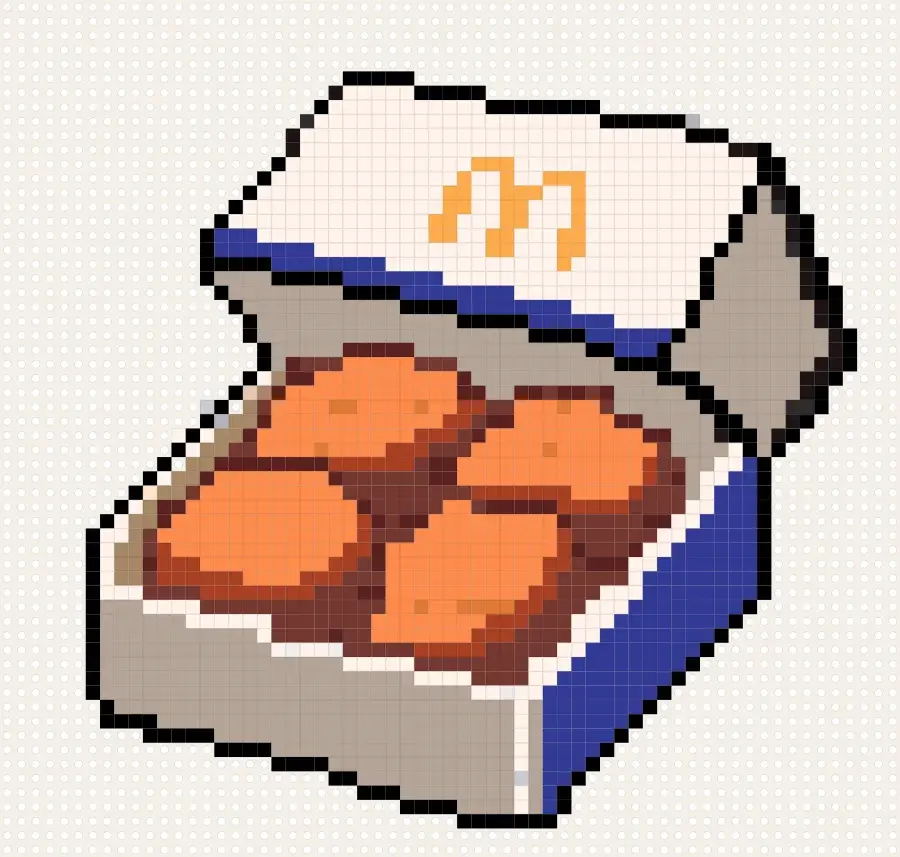
Hard • 63x60
An open takeaway box of crispy golden chicken nuggets, with a cream lid, blue trim and shaded cardboard sides.
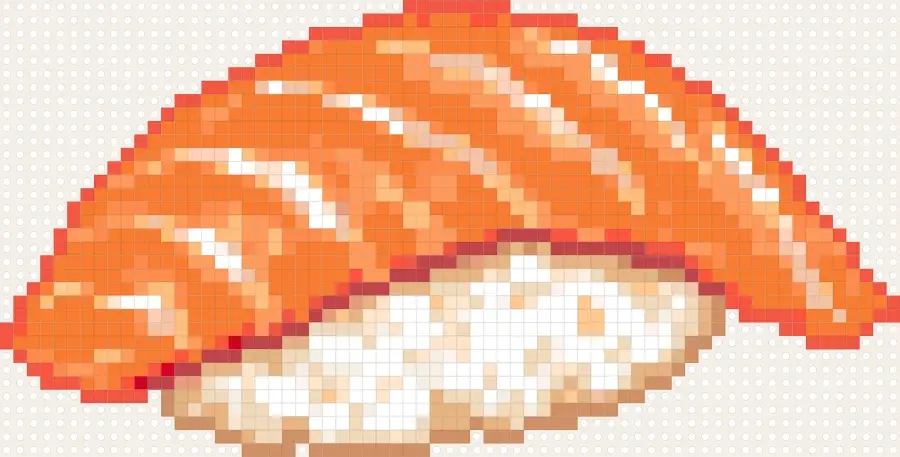
Hard • 67x34
A generous slice of orange salmon draped over a mound of white sushi rice, with pale marbling and softly shaded grains.
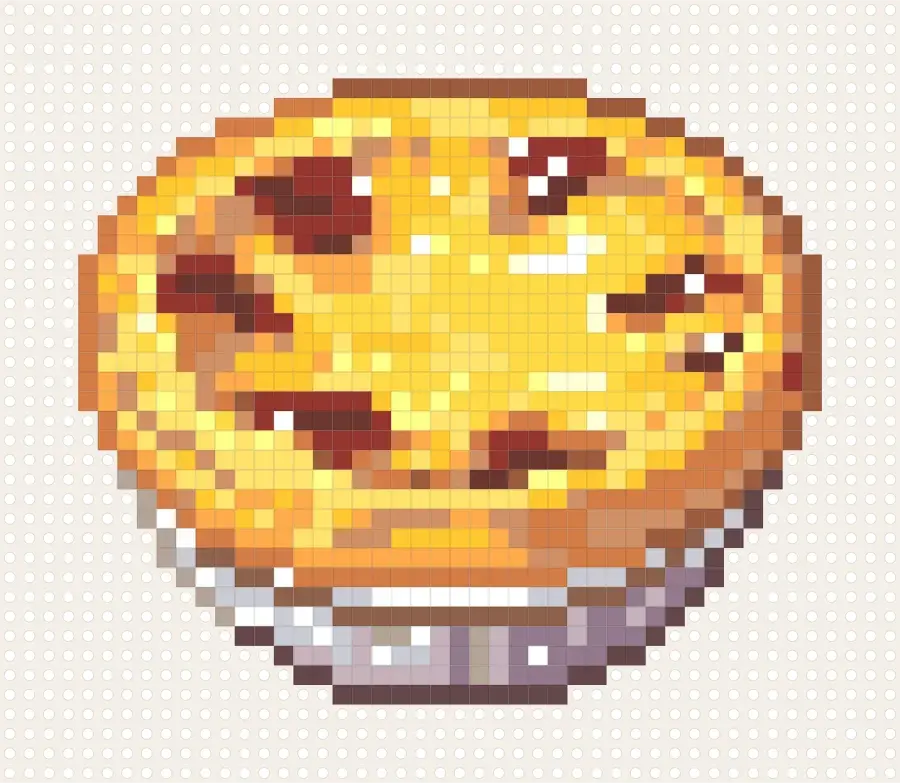
Hard • 46x40
A golden egg tart with toasted custard, a crisp pastry rim and a shaded foil cup. Warm yellows and caramel browns capture the little bakery treat.
Build a little bakery counter, put together a Hong Kong cafe spread, or pair salmon and eel nigiri for a sushi display. This collection mixes shaded food illustrations with playful designs such as a kitten in a banana costume, so you can choose a single favorite or plan a matching set.
Egg tarts, chocolate-chunk cookies and pineapple buns use warm yellows and browns to suggest golden crusts. Mango pomelo sago and a vanilla soft-serve cone bring in fruit colors and creamy whites. Pair a bakery design with iced yuanyang for a cafe-inspired display.
Salmon and grilled eel nigiri focus on fish texture and shaded rice. Wonton noodles and braised prawns add patterned dishes, leafy greens and sauce highlights, while fries and chicken nuggets bring a takeaway-snack theme. Pick by the details you enjoy rather than by the food's simple outline.
Many designs here span several pegboards and use closely related shades. Check the grid size and color list on the pattern page first. For a quick charm or a first project, the Small Patterns collection also has compact French fries and boba tea designs; the larger food charts suit display pieces and longer craft sessions.
Open a pattern to check its grid, bead count and color key, then prepare enough connected pegboards for the full width and height. Separate similar yellows, creams and browns by color code. Work from a clear reference such as the plate rim, carton or dark outline, and fill the food in sections. Keep white beads distinct from empty cells. Use the printable PDF as your guide, or adjust the palette in the editor before exporting.